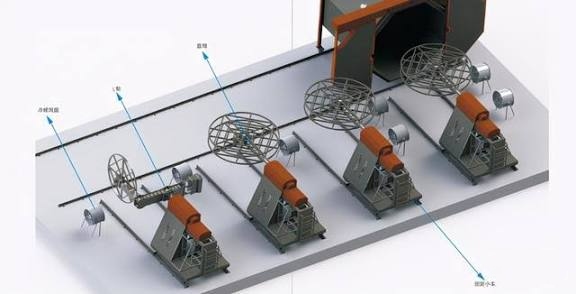

Rotational molding offers an unbeatable combination of structural durability, design flexibility, and cost efficiency. Whether manufacturing marine floats, agricultural chemical tanks, or heavy-duty outdoor gear, rotomolding delivers dependable, seamless performance at an optimized investment level.
|
Opening Dialogue
Product Manager We are designing large-scale hollow components and heavy-duty containers for harsh industrial environments. We need a manufacturing process that provides seamless strength, uniform wall thickness, and low upfront tooling costs. What is our best approach? Manufacturing Engineer Rotational molding (rotomolding) is ideal. It excels at producing stress-free, seamless hollow parts with consistent wall density and reinforced corners, all while keeping tooling costs under one-fifth of injection molding. Operations Lead It also offers fast turnaround times and incredible flexibility for short runs or complex designs without requiring expensive re-tooling. Supply Chain Manager Partnering with an experienced rotomolding OEM allows us to scale production efficiently and adapt product lines with minimal overhead.
*This guide covers the core features of rotational molding, its widespread applications across global industries, and why manufacturers choose it over alternative plastic processes. |

What Is Rotational Molding (Rotomolding)
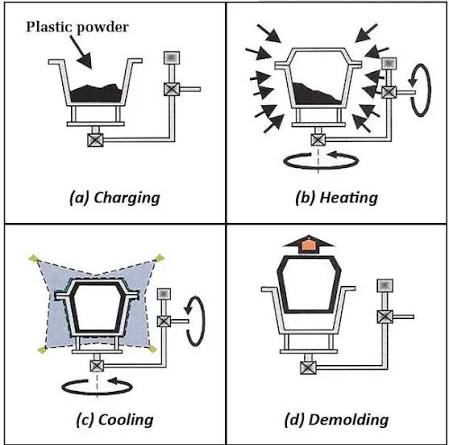
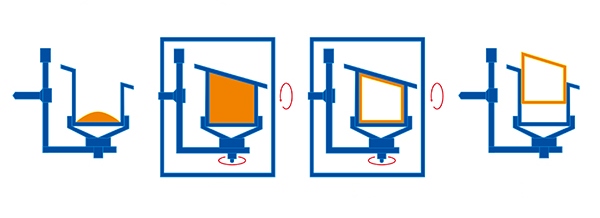
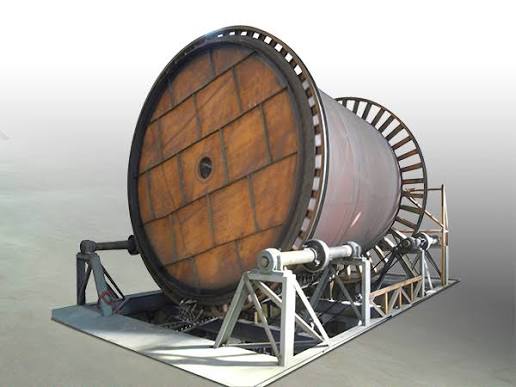
Rotational molding is a specialized thermoplastic process used to create hollow, seamless, single-piece plastic products. Powdered resin—most commonly LLDPE or HDPE—is loaded into a hollow mold. The mold is heated while continuously rotating along two perpendicular axes, causing the melted resin to evenly coat the internal cavity walls.
 |
Key Classifications & Additive Modifications
Unlike blow molding or thermoforming, rotomolding naturally deposits extra material on exterior corners and edges, maximizing structural integrity where stress is highest.
Operating without high pressure leaves the final product free of internal mechanical stress, dramatically reducing cracking and warping.
Manufacturers can adjust wall thickness (typically ranging from 1mm to 16mm) simply by changing the powder charge weight, without modifying the mold.
Manufacturing Advantages & Process Excellence
Unmatched Cost Efficiency
Tooling for rotational molding consists of lightweight aluminum or fabricated steel molds. Because the process operates at ambient pressure without intense hydraulic force, mold fabrication costs are less than 20% of equivalent injection or blow molds, making it exceptionally cost-effective for low-to-medium production volumes.
Production Flexibility
Rotational Molding vs. Alternative Processes
| Feature | Rotational Molding | Injection Molding | Blow Molding |
| Tooling Cost | Very Low (< 20%) | Very High | Moderate to High |
| Internal Stress | Zero (Stress-free) | High | Moderate |
| Corner Thickness | Thickened / Reinforced | Thinned | Thinned |
| Design Complexity | Complex Hollow Shapes | High Solid Precision | Limited Hollow Shapes |
| Part Size Limits | Virtually Unlimited | Limited by Press Tonnage | Moderate |
 |
|
|
Industry Trends & Expert Insights
Market Trends for 2026
Expert View
Rotational molding delivers a rare combination of structural durability, design freedom, and low capital investment—making it the definitive process for large hollow parts in severe service conditions.
— Dr. Aris Thorne, Senior Polymer Chemist, Global Plastics Institute.
 |
 |
Real-World Applications of Rotational Molding
1. Marine & Watercraft Infrastructure
Thanks to seamless construction, corrosion resistance, and high buoyancy, rotomolding dominates maritime manufacturing:
Pontoon floats & docks: Single-piece, leak-proof LLDPE structures engineered for long-term water immersion.
Boat consoles & fuel tanks: Seamless, impact-resistant containers that withstand heavy sea conditions without weld joints.
2. Transportation & Vehicles
Rotomolded parts provide lightweight alternatives to heavy metal, helping reduce vehicle weight and lower emissions:
Automotive & Heavy Equipment: Air intake tubes, fenders, seat frames, and battery enclosures.
RV water & waste tanks: Custom-shaped hollow tanks optimized to utilize tight chassis spaces.
3. Agriculture & Chemical Storage
Chemical inertness and environmental stress crack resistance make rotomolded containers essential for handling fluids:
Chemical Storage & Dosing Tanks: Industrial storage for acids, bases, fertilizers, and water treatment chemicals.
Agricultural Sprayer Tanks: UV-stabilized tanks built to withstand harsh weather and agrochemical exposure.
4. Industrial, Commercial & Recreation
Heavy-duty toolboxes & Camping coolers: Rugged, impact-resistant double-wall designs filled with PU foam for extreme durability and thermal retention.
Plastic lockers & Traffic Safety: Rust-proof lockers for gyms and schools, alongside impact-absorbing road barriers and traffic cones.
Industrial Advantage Summary
| Industry Sector | Rotomolding Advantage | Typical Applications |
| Marine Infrastructure | Corrosion-proof, zero weld lines, high buoyancy | Pontoon floats, boat seats, marine fuel tanks |
| Transportation & RV | Lightweight, complex space utilization | RV water tanks, fenders, ducting |
| Agriculture & Chemical | High ESCR, chemical resistance, seamless containment | Sprayer tanks, chemical storage drums, water tanks |
| Industrial & Outdoor | High impact strength, weatherability, low tooling cost | Toolboxes, coolers, plastic lockers, barriers |
FAQ
1. Why are rotomolding tools significantly cheaper than injection molds?
Rotational molding operates under low, ambient pressure. Molds do not need to withstand thousands of tons of hydraulic clamping force, allowing them to be constructed from thinner cast aluminum or fabricated sheet metal.
2. What materials are most commonly used in rotational molding?
Linear Low-Density Polyethylene (LLDPE) and High-Density Polyethylene (HDPE) represent over 80% of rotomolded products due to their excellent melt flow, impact toughness, and chemical resistance.
3. Can wall thickness be changed without altering the mold?
Yes. Wall thickness is controlled directly by the amount of plastic powder added to the mold prior to heating, allowing easy customization for heavier-duty requirements.
4. What are the size limits for rotomolded products?
There is virtually no upper size limit. Rotomolding can produce everything from small hollow toys to massive 50,000-liter industrial chemical storage tanks.
|
References
|
Scan to WhatsApp :

Home
products
contact