
Xiamen Mellow Rotomolding, dedicated on rotomolding /rotational moulded R&D manufacture, is located at beautiful coastal city Xiamen.



Xiamen Mellow Rotomolding, dedicated on rotomolding /rotational moulded R&D manufacture, is located at beautiful coastal city Xiamen.
If you own a pontoon boat, the seats are by far the most heavily used parts on your vessel. Whether you are cruising casually with family or hosting friends for a water party, you spend most of your time sitting here. Many boat owners wonder: their brand-new pontoon boat seats look solid and attractive, but after a period of use, they gradually fade, turn brittle, develop mildew spots, or even start to smell musty.
Pontoon boat seats operate in far harsher conditions than ordinary outdoor furniture, constantly exposed to sunlight, fresh or saltwater, wind and rain. Before learning maintenance skills, it is critical to understand the two main culprits that damage pontoon boat seats: UV rays and moisture (salt spray)

Enemy #1: UV Rays
Many boat owners prefer to buy pontoon boat seats built with UV-resistant properties. Here is a common misconception: UV-resistant fabric does not mean “permanently ageless”. It only slows UV damage and reduces fading and cracking, rather than blocking sunlight completely. Even premium UV-resistant vinyl will age gradually under unshaded full sun exposure. Regular maintenance helps the fabric deliver its full protective performance.
Enemy #2: Moisture and Salt Spray
Splashing lake water, rain, wet swimwear, plus salt spray from saltwater boating form the second big threat. Moisture easily gets trapped in cushion folds, stitching gaps and underneath seats, creating a closed damp environment. Dampness is perfect for mildew growth, leaving ugly black stains and unpleasant odours, and slowly eating away the vinyl stitches.
For saltwater boating, residual salt brings extra harm. Salt crystals continuously wear the vinyl surface and speed up fabric deterioration. Moisture buildup affects not only cushions but also accumulates in gaps of the seat base, which requires regular cleaning.
Two Components of Pontoon Boat Seats: Cushions & Rotomolded Base
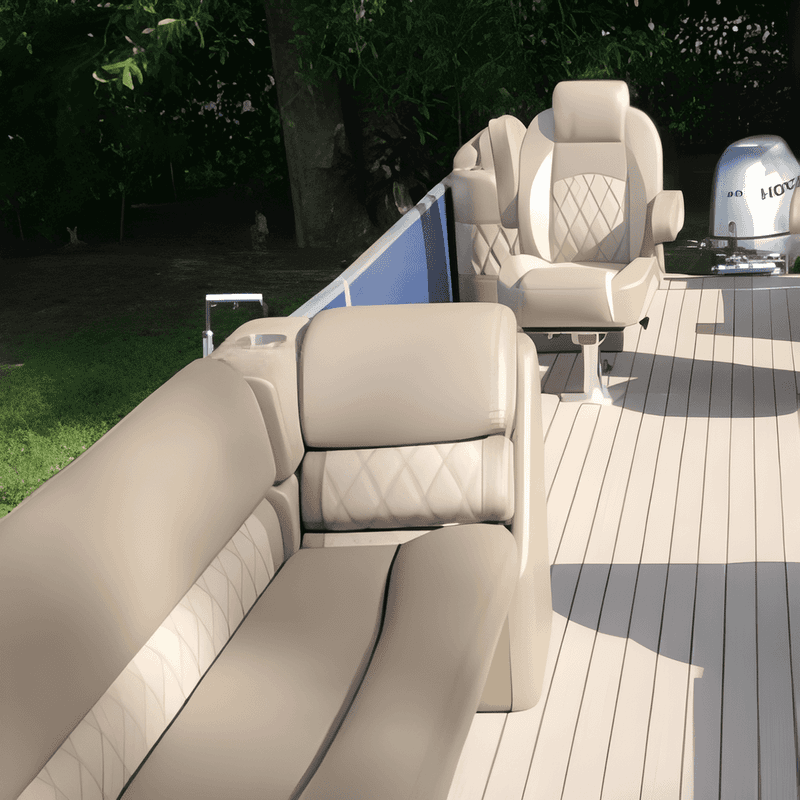
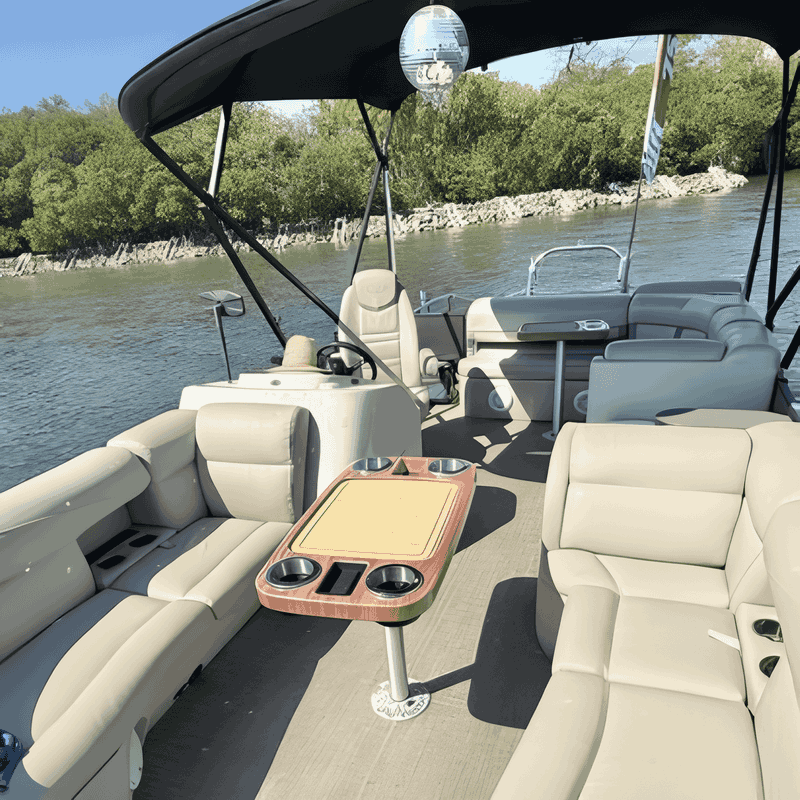
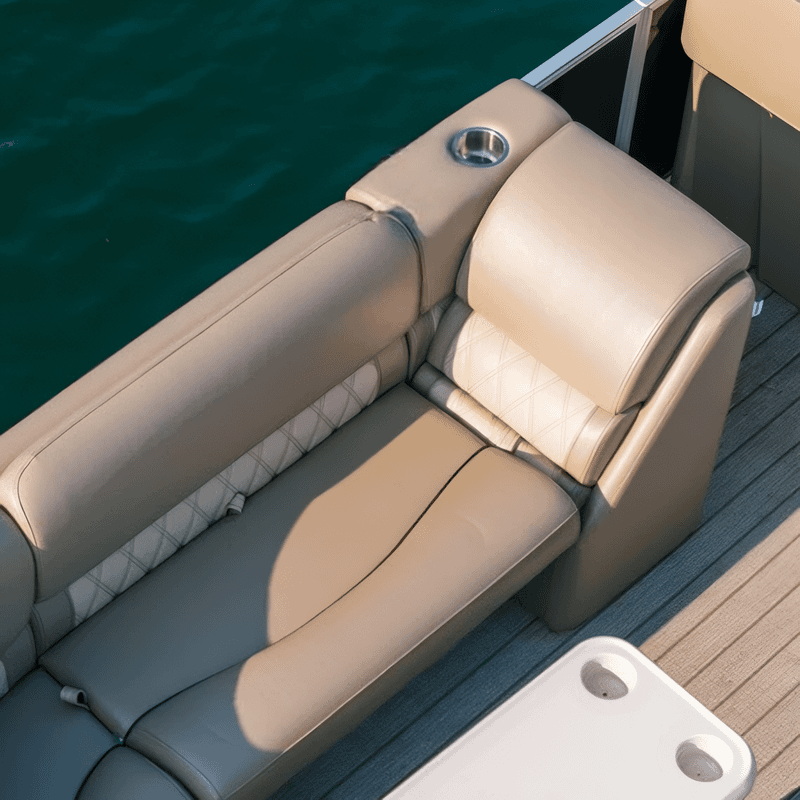
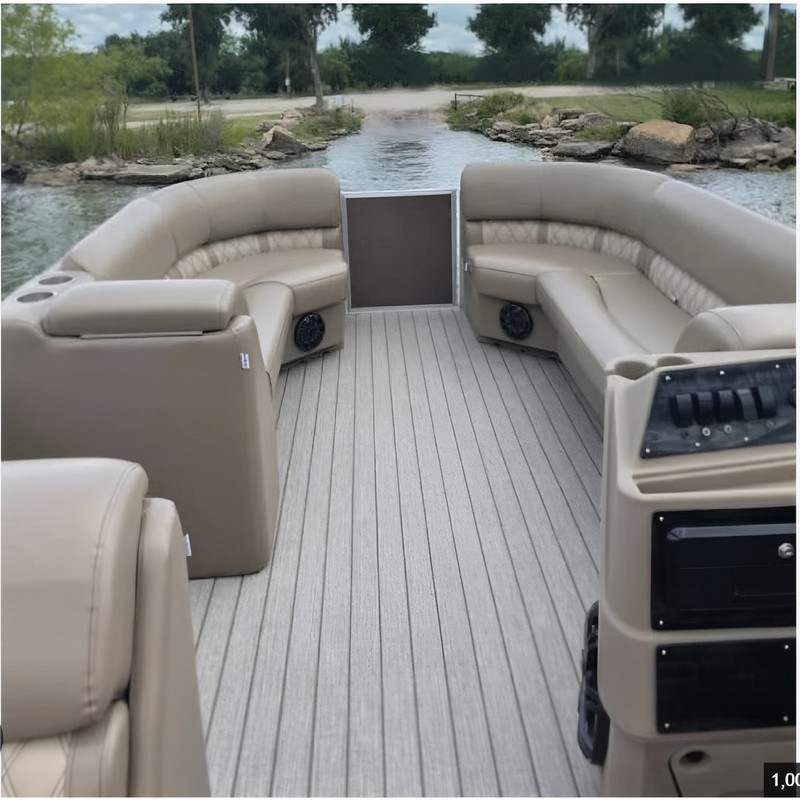
High-quality pontoon boat seats on the market consist of two key parts: cushions made of marine-grade vinyl fabric & high-density foam, and the seat base. Many heavy-duty pontoon boat seats feature one-piece rotomolded PE bases. Rotomolded bases stand out thanks to seamless construction, rust-proof performance and excellent impact resistance, ideal for tough marine environments. The cushion is a wearable component; its inner foam is protected mainly by UV-resistant vinyl fabric. These two parts use different materials, age in different ways and require separate maintenance routines.
 |
 |
 |
 |
Quick recap
UV rays ruin the look and flexibility of upholstery; moisture and salt spray trigger mildew and corrode seams. Understanding these two factors lays the foundation for proper cleaning and maintenance later.
Basic maintenance can greatly extend the service life of your pontoon boat seats.
No. UV resistance is an inherent material feature. It only slows sun damage and cannot fully block UV rays. Continuous outdoor exposure will still age the fabric slowly. Regular cleaning and protective care are still required.
There is no sea salt in freshwater, but lake water contains minerals and sediment. Trapped moisture can still cause mildew. If you occasionally sail in saltwater, salt residue will cause much more severe damage.
Rotomolded one-piece PE bases do not rust and require no anti-rust paint. Simply rinse gaps regularly to remove dirt and sediment. Most of your protection work should focus on the marine-grade vinyl fabric of the cushions.
Pontoon Boat Seat Daily Cleaning Guide | Which Cleaners You Must Avoid! We will walk through standard cleaning steps after every boating trip and list cleaning products that can permanently damage your vinyl seats.
Scan to WhatsApp :

Home
products
contact